Teaching with AI
For faculty and educators who want AI for science to be part of their discipline, not a specialty confined to computer science. From community colleges to research universities.

An annual Faculty Launch Program
Faculty at ISU, UI, and UNL already teach with scientific data, machine learning, simulation, and advanced computing. HEARTLAND's role is to refactor, connect, and scale that material onto shared infrastructure, and to make it reusable at other institutions. Each year, faculty teams would propose one of three things, with 8 to 10 awards planned a year.
Selection weighs student reach, reuse across institutions, and fit with the science drivers. Awards fund people, not hardware: consortium computing supplies the infrastructure.
A compact module
Introduce AI-enabled discovery in a STEM course you already teach, with limited refactoring.
A research-enablement activity
A facilitator-led team ports a workflow onto Hub resources, benchmarks and documents it, and turns it into reusable training material.
An integrated pilot
Undergraduate or community-college students work with authentic data and real infrastructure.
What selected teams receive
The path runs from module to research: a classroom module becomes a capstone project, then a scalable workflow launched with the Corps.
- Support for faculty and student effort, facilitation, and materials
- Priority consultation with an AI-for-Science Corps facilitator
- Curated datasets, containers, and reference workflows
- Instructional-design and assessment support
- A compute allocation sized to the course
- A seat at the summer AI-for-Science Institute
The AI-for-Science Institute
Extension's in-service training, for AI. Each summer, a week-long residential Institute, alternating between Iowa and Nebraska, would prepare instructors to teach with AI and shared computing. The first would run at the end of Year 1, after a winter virtual onboarding.
Each participant meets the Corps facilitator who will support their course during the year, commits to a local session on their home campus within twelve months, and joins a monthly online community of practice. Over five years the Institute aims to train 75 to 100 instructors.
A faculty module workshop
Bring one course and work with instructional designers from the campus teaching centers (ISU’s CELT, UNL’s ECEC, and UI’s Office of Teaching, Learning, and Technology) to fit and assess the modules, then work through them as your students will.
Hands-on training
GPU and research-software skills, data engineering, managing cloud costs, and onboarding to the National Research Platform and NAIRR, with accounts and class allocations issued on site.
A hackathon
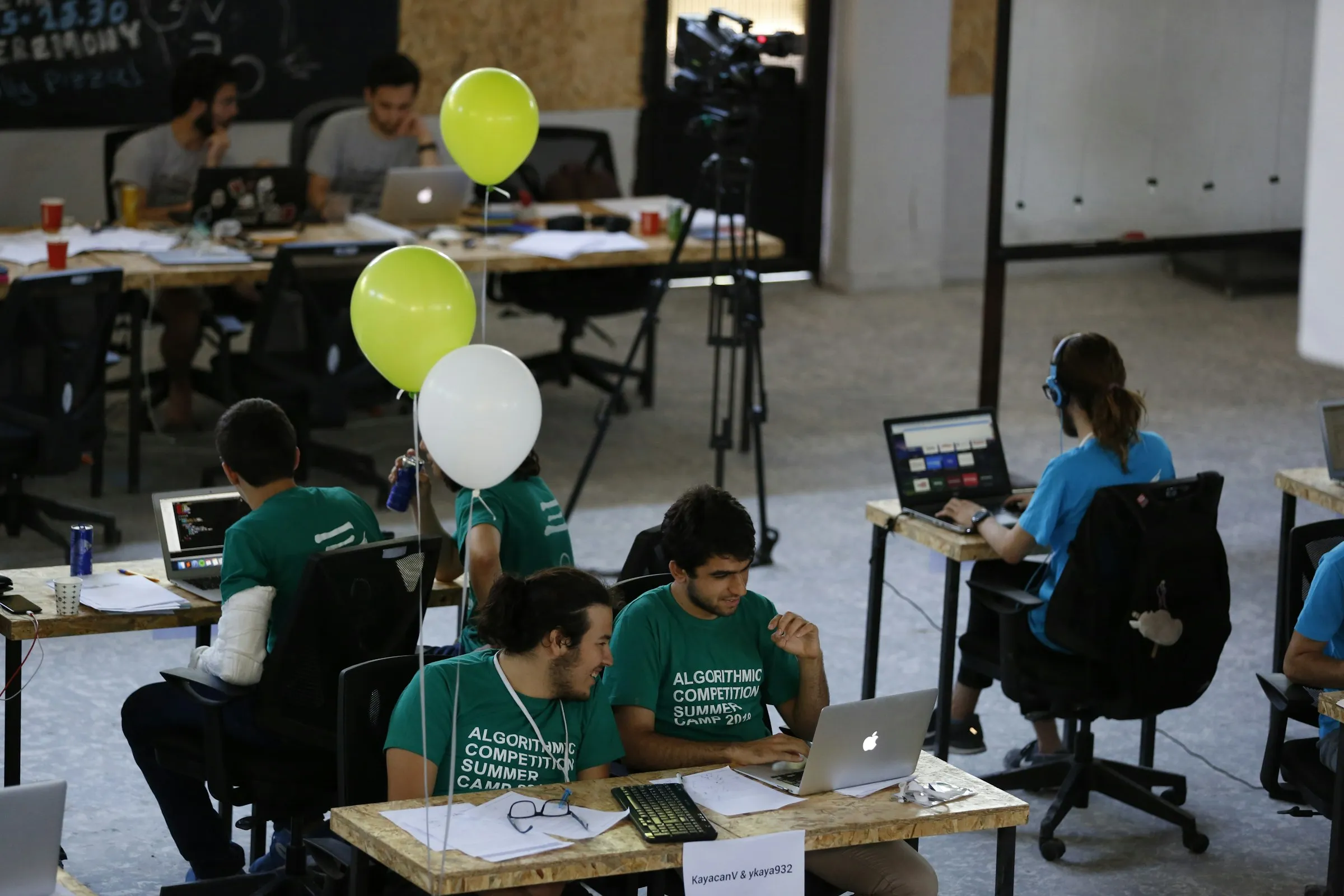
Community-college and university students work alongside faculty teams on authentic regional datasets.
Seats for every kind of campus
At least 30% of faculty seats and a third of hackathon seats go to two-year, tribal, and primarily undergraduate institutions, with travel and stipends so they take part on the same footing.
National and industry partners in the room
NAIRR and National Research Platform staff and industry partners are invited, and the week doubles as the Hub’s annual all-hands.
An initial portfolio taking shape
Enhanced and new courses, workshops, and activities across all three universities and the partner colleges, spanning the Field, Molecule, and Factory drivers and genomics. At full offering they would reach about 1,600 students a year, growing toward 3,000 by Year 5.
- Introduction to AI and machine learning (UI)
- AI for molecular and enzyme design (UI)
- Data science in chemical and engineering systems (UI)
- Foundations of pharmaceutical sciences (UI)
- Data science, bioinformatics, and AI for genomics (UI)
- AI in agriculture and life sciences (ISU)
- AI for agricultural sensing and phenotyping (ISU)
- Introduction to applied AI (ISU)
- AI for manufacturing (ISU)
- Accelerating scientific research with AI (ISU and UNL)
- An AI module in an engineering course (UNL)
- Community-college AI-for-science practicum
- AI on the shop floor, for working professionals
Open, and better each year
Every module follows one template, so it can move between campuses with little rework.
- Learning objectives
- Infrastructure requirements
- Reproducible environments
- Instructor guidance
- Assessment
Materials improve with every cohort. Instructors report what broke: a lab that fails on another campus's hardware, a dataset too large for a semester, an assignment students route around. The corrected version is what the next cohort teaches.
Modules, notebooks, datasets, containers, and instructor guides would be versioned in a public HEARTLAND repository with citable DOIs, licensed CC BY 4.0 with code under an open-source license, built to WCAG 2.1 AA accessibility, and listed in NAIRR's education resources and the National Data Platform.
Tell us about your course
We're talking with faculty now about which courses, labs, and modules to start with. If you teach in Iowa or Nebraska and want your students working with AI and shared computing, tell us what you teach and what gets in the way.