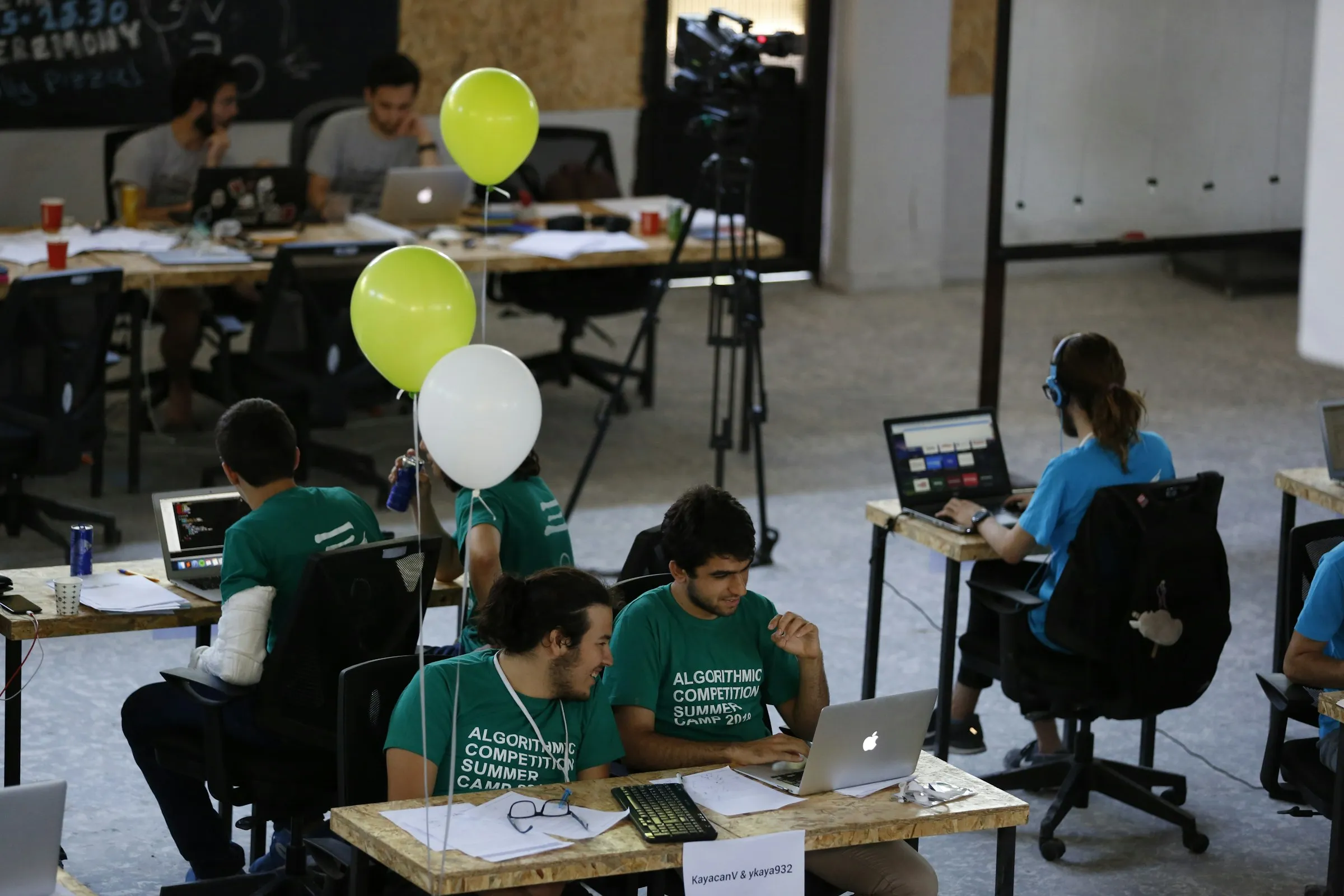
Students and workforce
Students won't only take courses about AI. They'll operate and support real scientific infrastructure, in paid roles, on a path from a first module to a career.

A pipeline, not a one-off internship
The workforce plan spans community colleges, undergraduate and graduate education, research computing staff, and continuing education. Community and technical colleges help build the pipeline, rather than serving only as recruiting sites.
An Industry Workforce Panel of regional employers and workforce agencies would review the skills map and credential competencies every year, so training tracks the jobs the region is hiring for.
Module or course
Start with an AI-for-science module in a course, at a community or tribal college, a four-year college, or a research university.
Hands-on practicum
Work with managed notebooks, authentic regional datasets, and real AI workflows. At partner community colleges, practicum cohorts of about 20 students a year count toward a for-credit certificate.
Student infrastructure role
Paid work inside the AI-for-Science Corps from the first year: undergraduate AI fellows, student infrastructure roles at the research computing centers, and student positions on Launch projects.
Internship or co-op
Industry partners provide internships, co-ops, mentors, and authentic problems, and help validate the skills taught.
A career in AI infrastructure or AI for science
Into research computing, facilitation, and engineering roles. Students who move to industry count as success.
A stackable credential ladder
Six skills the national AI workforce needs, mapped onto four levels that build on credentials the consortium already awards, with transfer from two-year programs into degrees.
- Data engineering and curation
- Research software engineering
- Model deployment
- GPU programming
- Access control and secure research environments
- Research computing facilitation
- L1
Micro-credentials
Non-credit HEARTLAND micro-credentials built on an existing 12-course series in scientific machine learning, MLOps, parallel deep learning, vision, language, and generative models. Open to students and working professionals.
- L2
Community-college certificates
For-credit certificates that embed the AI-ready data module and the practicum, building on existing college AI certificates and articulated to the universities.
- L3
Degree pathways
Applied AI and AI minors and programs at ISU, UI, and UNL, with transfer from L2 certificates.
- L4
Professional credentials
Industry and community certifications for Corps staff and student employees, including research-computing facilitation competencies.
Beyond the campus
High-school students
Dual enrollment through partner colleges brings high-performing students into the first two credential levels, building on statewide AI hackathons, 4-H, and FFA programs.
Working professionals
AI + X short courses with CIRAS, the Nebraska Manufacturing Extension Partnership, and Iowa Workforce Development reach incumbent workers and IT staff.
Corps professionals
A ladder from student worker to junior facilitator, facilitator, and lead, with cross-site rotations and a monthly regional community of practice.
Proposed annual targets
Rising from Year 1 to Year 5, set with the external evaluator against a Year-1 baseline.
| Measure | Year 1 | Year 5 |
|---|---|---|
| Students in paid Hub roles | 12 | 40 |
| Internships and co-ops with industry partners | 5 | 20 |
| Credentials awarded | 20 | 150 |
| Hub-trained students placed in AI infrastructure or AI-for-science roles | 3 | 25 |
Students, advisors, and employers
If you advise students, run a program at a community or tribal college, or hire for these skills in Iowa or Nebraska, we want to hear from you as placements take shape.
Get in touch